Complexity-based analysis of retinal electrophysiology in neurodegenerative diseases.
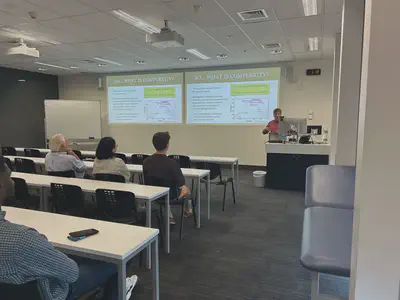
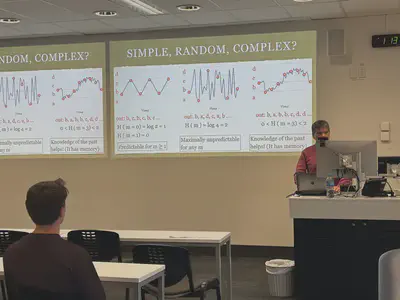
Interest in entropy-based tools for biological signal analysis has surged since the introduction of the multiscale entropy (MSE) method. This approach quantifies the disorder, or entropy, of physiological outputs across multiple time scales, resulting in an MSE curve that estimates the system’s complexity. According to the complexity-loss theory, aging and disease degrade this complexity, a notion supported by recent findings in conditions such as depression, Parkinson’s disease, schizophrenia, and Alzheimer’s disease. In this talk, we will provide a concise overview of the fundamentals of complexity analysis in electrophysiological signals and explore their relevance to neurodegenerative disorder diagnosis. We will demonstrate the utility of MSE tools using micro-electroretinogram recordings from healthy and transgenic mice (5xFAD, Tg XBP1s, and Tg XBP1s/5XFAD) obtained via multi-electrode arrays in response to various visual stimuli. We will highlight the potential of non-traditional retinal electrophysiology assessment in developing novel diagnostic methods for Alzheimer’s disease through the eye, including the use of novel and non-invasive ERG protocols using the RETeval device. The MSE analyses show great promise and could appeal to a broad neuroscience and biomedical engineering audience. For researchers examining biological system complexity, MSE tools offer valuable applications across a range of biomedical challenges, potentially paving the way for innovative diagnostic techniques and further research opportunities.

Leo Medina
Principal Investigator
Leo teaches engineering courses at Usach, and his research interests are in the neural engineering and computational neuroscience fields. His work has contributed to understand how nerve fibers respond to electrical stimulation.