Slow Inactivation of Fast Sodium Channels Mediates Accommodation of Nerve Fiber Activity During Kilohertz-Frequency Spinal Cord Stimulation
Abstract
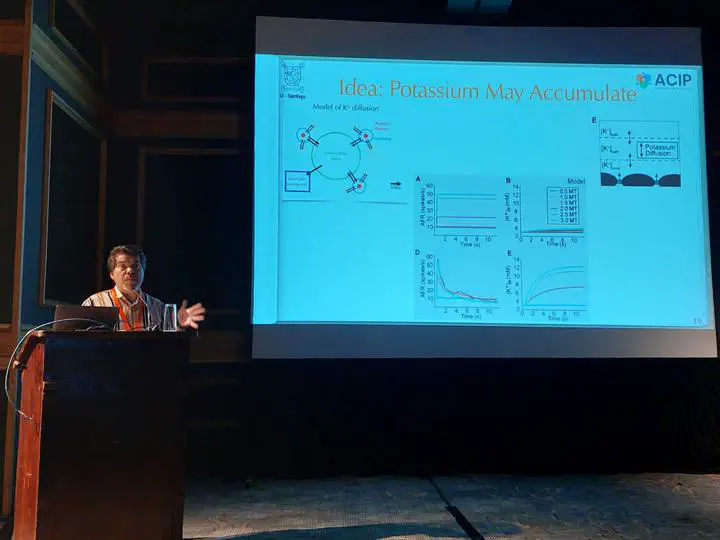
Spinal cord stimulation (SCS) is a well-established treatment for chronic pain, in which current pulses are applied epidurally to activate the dorsal column (DC) fibers. Recently, kilohertz-frequency (KHF) SCS was proposed as a potentially more effective treatment than conventional SCS. DC fibers respond to KHF signals with complex patterns of activity, including cessation of firing without conduction block. However, the mechanisms underlying these responses are not clear. We combined computational modeling and experimental measurements to clarify the mechanisms underlying the complex response of DC fibers to KHF SCS. We implemented a cable model of a DC fiber using published morphological data and ion channel dynamics. We validated the model using in vivo measurements of rat single DC fibers. Subsequently, we incorporated a model of the dynamics of extracellular potassium and added a slowly inactivating gate to the fast sodium channels at the nodes of Ranvier. We coupled the fiber model to a volume conductor model of SCS and applied the KHF SCS signal to quantify firing activity for different fiber diameters at different locations in the DCs. Only after incorporating the slowly inactivating gate, the model fibers were able to replicate the profiles of firing activity observed in experimental recordings of single fibers. As well, we measured the extracellular potassium concentration in vivo and found that, during KHF SCS, it increased transiently in a manner that resembled the onset firing response. The presence of a slowly inactivating gate in the DC fibers replicates the accommodation of activity during KHF SCS.

Leo Medina
Principal Investigator
Leo teaches engineering courses at Usach, and his research interests are in the neural engineering and computational neuroscience fields. His work has contributed to understand how nerve fibers respond to electrical stimulation.